Your Cart is Empty


Humans have been using chemical agents to clean for around 5,000 years. But there's growing scientific evidence that these agents can increase our exposure to harmful air contaminants, including particulate matter. In fact, household cleaning products have been linked to respiratory issues, skin irritation, and toxic fumes from mixing chemicals like bleach and ammonia. This risk is higher for cleaning products in spray form because the chemicals become airborne, making it easier for us to inhale larger amounts.
The good news is that cleaning your toilet doesn’t have to be toxic. Ingredients like baking soda, white vinegar, citric acid and essential oils can be as effective at tackling dirt, limescale and bacteria, without leaving behind toxic residue or fumes. Likewise, switching from a plastic toilet brush, which harbours oils, debris and bacteria, to a plastic-free one with antimicrobial properties, can reduce your exposure to germs.
In this guide, we’ll explore why you should make the switch to natural cleaning, the essential tools you’ll need, and a simple, step-by-step method to get your toilet sparkling clean.
Conventional cleaning products are often packed with harmful air contaminants that increase our risk of respiratory issues.
By contrast, a natural approach uses simple, natural ingredients such as baking soda, white vinegar, citric acid, and essential oils to clean. These tackle dirt, limescale, and bacteria without the harmful ingredients.
But the problem isn't just the liquids; it's the tools we use. Standard toilet brushes almost always feature plastic heads and handles that break or crack and cannot be recycled, and they harbour more bacteria than alternatives. Plastic-free toilet brushes, on the other hand, are made from sustainable materials such as bamboo, wood and natural plant fibres, and are biodegradable after use. Their materials are also inherently antimicrobial and non-porous, making them less likely to harbour odours and germs.
Researchers concluded in their 2024 review that green products. which contain only biodegradable ingredients, seem to be less harmful than conventional ones. In short, switching to plastic-free, natural cleaning is better for you and the planet.

Before you begin, gather your sustainable cleaning kit. You might already have some of the ingredients in your cupboard, and with the right reusable essentials, you'll be set to clean without the waste and contaminants.
Ingredients that you can use alone or combined to create a natural cleaner.
You can read our guide, The Best Eco-Friendly Cleaning Products, for more recommendations.
These will help you to clean the toilet without plastic or single-use paper towels and cloths.

Start by giving the bowl a good flush. If you're dealing with stubborn marks, you can get the most out of your cleaner by removing some of the water first. Simply press and hold the flush handle or use an old cup to scoop out the excess water.
You can:
Then, take your plastic-free toilet brush and give the entire bowl a thorough scrub. Pay special attention to the rim where buildup can occur.
For stubborn stains, try using citric acid and warm water.
This is the spot that often gets neglected. While the cleaning mixture is still fizzing in the bowl, use your brush to scrub the underside of the rim. If you have a toilet brush with a pointed or narrow head, use it to get right up into the hidden spaces and around the hinge area where the seat attaches. A final flush will wash away all the loosened dirt.
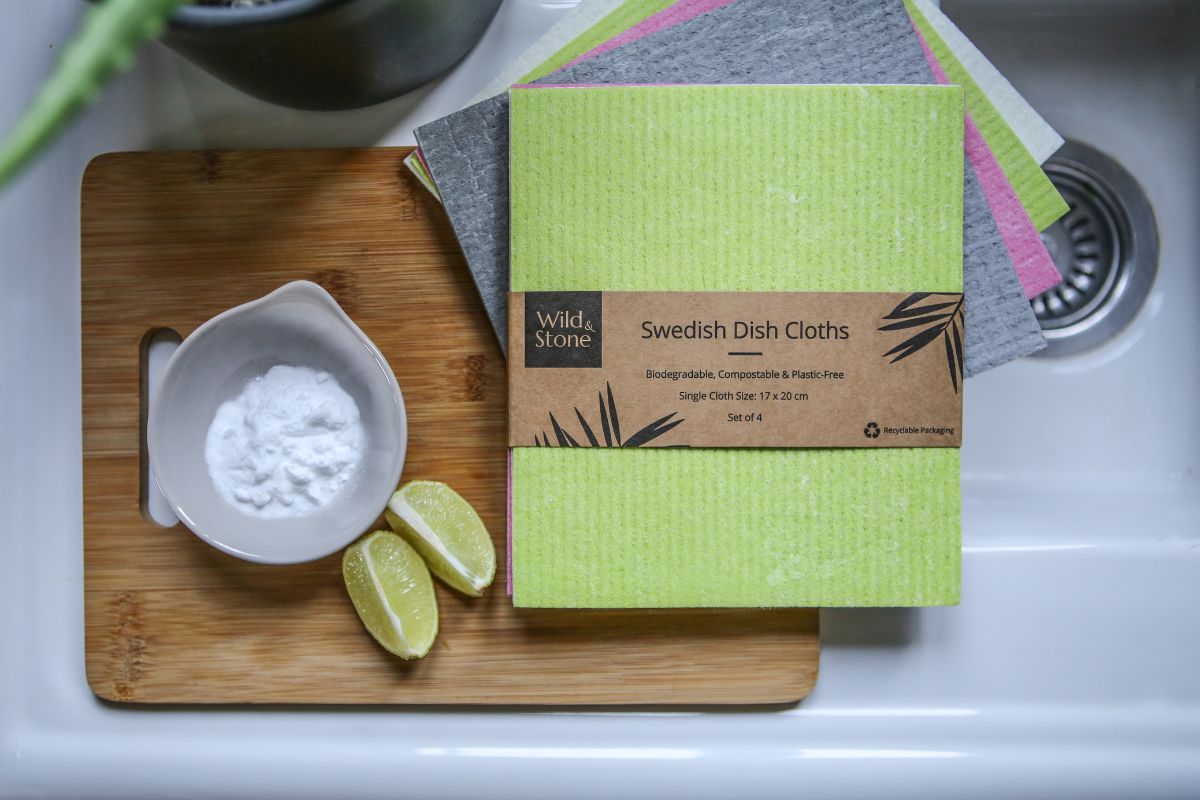
Now, turn your attention to the outside. Dampen your reusable cloth (we recommend our Swedish dishcloth) with a simple, all-purpose cleaner. You can make your own toilet cleaner by mixing equal parts water and vinegar in your spray bottle, and adding a few drops of lemon or lavender oil for a fresh scent.
Use the damp cloth to wipe down:
You might wish to follow this with a dry cotton cloth to wipe up any remaining water or residue. Otherwise, put your dishcloth in the dishwasher or washing machine, ready for its next use.
For a once-a-month deep clean, you can add on the internal parts of your toilet. Simply pour two cups of white vinegar into the overflow tube (the open pipe in the centre of the tank, not the bowl itself), let it sit for an hour to break down mineral deposits inside the tank, then flush.
Switching to natural cleaning products is one simple but effective swap that you can make in the bathroom. And a little regular maintenance makes a big difference! For a daily refresh, sprinkle a little baking soda into the bowl each night and give it a quick scrub with your plastic-free brush in the morning to prevent buildup. Always remember to rinse your brush and let it dry to keep it fresh and hygienic.
Wild & Stone's mission is to create stylish and easy-to-adapt alternatives to common plastic products around the home.We source all our products sustainably, from raw material to final delivery. Shop all of oursustainable home & lifestyle products on our website, or browse ourhousehold collection for more kitchen and bathroom swaps.
Share your plastic-free swaps with us at hello@wildandstone.com or tag us on Instagram #wildandstone.

Switching to a bamboo toothbrush is a simple and sustainable step for your daily routine. We are going to explore the essential maintenance routine that keeps your toothbrush is great condition, and some warning signs that your brush needs replacing.

Wooden utensils can last a lifetime, but only if you look after them. In this guide, we will cover everything you need to know about how to care for wooden utensils, from how to clean them properly and whether they're hygienic, to how to oil and condition them.

We compare dish brushes vs sponges across hygiene, longevity and waste so you can decide which is best for your kitchen.